Monthly Archives: March 2021

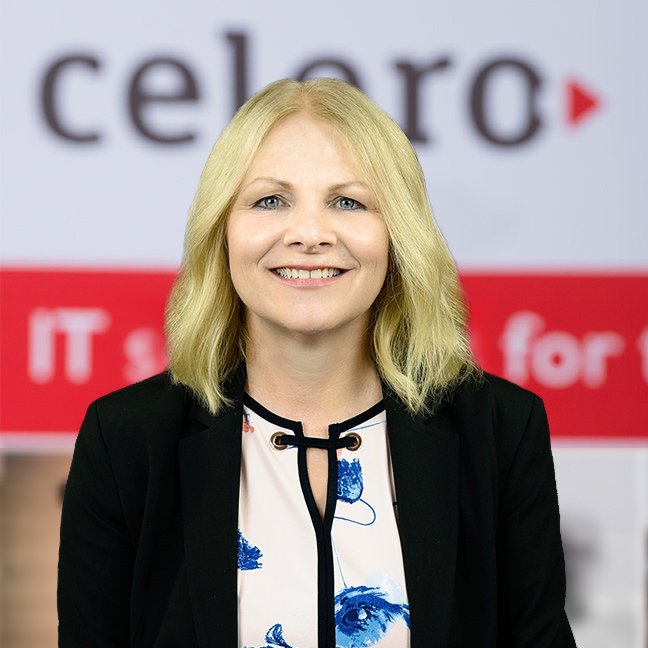
DIACC Women in Identity: Shelley Bryen

DIACC is hosting a series of spotlights showcasing our amazing female DIACC members in the digital identity space, noting the importance of diversity. These spotlights will be regularly socialized through DIACC’s LinkedIn and Twitter channels as well as our monthly member newsletters.

If you’re a DIACC member and would like us to feature your spotlight, contact us today to learn more!

How long have you worked in your sector, and in your current position? 

I have been in the tech industry for over 25 years in a variety of companies providing every type of software solution from graphic signage design tools, to Operating Systems, to 3D instrumentation clusters for avionics, to remote identity and document verification.  I joined WorldReach Software, in the role of Director of Marketing, 11 years ago. I’ve loved every minute of it!

WorldReach, for those who have never heard of us, uses innovative processes and technology to verify you are who you say you are. We enable highly trusted digital services through our systems for government (borders, immigration, passport and consular) for digital on-boarding, safe and seamless travel, and digital Identity verification and corroboration.

We are probably best known for the core digital channel solution behind the UK Home Office’s EU Settlement Scheme. This smartphone based digital ID Verification (IDV) and enrolment capability has become the world’s most successful immigration programme of its kind with over 5 million completed applications to date!

What has your career journey looked like? Have you always worked in the private sector? 

My career path has been so varied my general joke is “You can’t get here from there”. My educational background is in Fine Art. In fact, I have a painting in the Parliament Buildings. The short answer (which is not actually that short) is Fine Art led to Freelance Illustration, which led to Graphic Design, which led to Marketing Management in a software company. This opened me up to a much more technical path – first to Strategic Alliance Management for the Embedded OS market, then to Industry Segment Management, then to Product Management, then finally back to what I would term “Technical Marketing”.

I have always worked in the private sector, however for more than the last decade, I have been working exclusively in B2G. This has meant that one of my primary goals today is to understand all the challenges, wants, needs and technical requirements of the public sector. WorldReach clients are Governments from all over the world: Ministries of Foreign Affairs, Immigration and Border Agencies, but also any department with a citizen service role. Therefore, I spend the majority of my time researching Government digital service delivery program requirements worldwide.

When you were twenty years old, what was your dream job, and why? 

Given my artistic DNA, it likely will not be that surprising to hear that my dream job would have been to be a conservator in a prominent museum – someone who spends all their days cleaning, repairing, protecting and conserving incredible works of art. That would have been the perfect combination of my love of art, art history and my annoyingly anal-retentive detail-oriented skillset. Either that or I would have loved life as a professional soccer player! Even in my early twenties, I did not envision a long career in technology.

As a female leader, what has been the most significant barrier in your career?

Externally – being taken seriously. As a woman in the male-dominated tech field over the last quarter of a century, one often hears this. For me personally, also being an openly gay woman adds an additional nuance to climbing the corporate ladder.  I have unfortunately experienced homophobia from co-workers and management a few times in a few companies in the past, but I am happy to report that that appears to be in the rear view mirror for me. Still, it is a reminder of why we all need legal protections against discrimination in the work place and employment strategies focussed on diversity and inclusion.

Internally – overcoming the nagging doubt that you do not “belong in the room where it happens”.  No matter how much experience you have in a certain industry, women tend towards the infamous “imposter syndrome”. Once you push that aside – and maybe that just comes with growing older and wiser – it really does become far less of a barrier. Belief in oneself goes along way to harnessing your own potential.

How do you balance work and life responsibilities?

Early in my career, I had to step away and become the main support for my incredibly ill child. As a mother, of course, that’s would you do, and what you want to do – there was no question. However, it also helps put things into perspective. There are always things in ones’ life that are more important than work. My son is now 33 years old and cancer-free, thankfully.

In the fast moving, highly competitive tech world, one’s work life can easily take over every waking hour – especially now, during COVID, when many of us are working from home. The boundaries can get very fuzzy. Nevertheless, it is still incredibly important to ensure you understand the crucial role of self-care. If you are exhausted, if you work around the clock, every aspect of your life will suffer – and that includes work.

I personally need physical activity. A long walk with my wife, friends and loved ones, working out in my basement gym, playing with my dogs – it all helps this balance ‘dance’.

How can more women be encouraged to pursue careers in the tech space? 

Women can do anything, but sometimes we need permission to dream big. I think the media can play a big role in this as well. Girls and women need to see people just like themselves succeeding. They need to hear the ups and downs of real-world tech careers. They need to think, “If she can do it, maybe I can too!” Let’s just celebrate all the incredible women in tech much more often!

I also think more needs to be done in our educational system. More female guest speakers to come into classes (virtually or physically) and share their journeys, especially in STEM. Perhaps more mentor initiatives. I know I would have loved to participate in anything that showcased successful women particularly in traditionally male-dominated jobs. To show how fascinating and rewarding delving into technology can really be. To imagine yourself having an effect on the systems that are being built now and in the future. To take pride in creating, in innovating. It took me far too long to discover this on my own.

What are some strategies you have learned to help women achieve a more prominent role in their organizations?

Do not be afraid to take up space. Do your homework and use your voice confidently. Be respectful and open, but do not apologize for everything.

A very good friend of mine gave me some great advice when I was in middle Management struggling to climb. She reminded me “perception is reality”. In the corporate world, you can be a wonderful capable worker, quite talented, but if the people in charge do not see it or know it, you will remain in the very same place but just with an ever-increasing workload. So – Volunteer for projects that will “stretch you”, that will require you to grow and learn, that will be seen. Be helpful and kind to all your colleagues, contacts and teammates. Go out of your way to lessen their workload, to be a person of value. Soon, it will be others that will be singing your praises – you will not have to!

If Senior Management do not value you in title, responsibilities and compensation, do not be afraid to leave and find it elsewhere. Have confidence in your own value.

What will be the biggest challenge for the generation of women behind you?

As the next generation of women begin to earn their way into more and more powerful positions, it will be easy to forget how hard the fight has historically been for the generation before them. Look back and learn. Look to the other successful women in the industry. You don’t have to reinvent the wheel.

One of the biggest challenges these women will face is to recognize when their own drive and competitiveness becomes destructive. You cannot sustain being a “superwoman”. We are all human…and this where work/live balance is so important.

What advice would you give to young women entering the field?

Use your own natural talents to the best of your abilities; apply it to your passion and cultivated it. Whether that is being detail-oriented, analytical, a problem solver, purely creative, a team player or combinations of all of them. Know there is value in it all.

There is a misconception that there is only one type of person in STEM. An engineer, a scientist, a developer, a mathematician – only a linear thinker. Women often bring a different perspective, a different way of thinking and solving problems. A creativity. This variation, this diversity of thought is a necessity to produce the best most inclusive results – and the most interesting people!

Shelley Bryen is the Director of Marketing at WorldReach Software

Spotlight on IMDS

1.What is the mission and vision of IMDS?

Since the 1980s, we have been hearing about paper-free businesses and the drive to move toward a more digital workplace. Today, the approach to digitally transform businesses has shifted from a technology-first perspective to a more business centric approach, with paper-free processes becoming a focal point and opportunity for many organizations.

In 1995, IMDS’ co-founders wrote the book The Advanced Document and described the following three areas: outbound documents, inbound documents and the lifecycle of documents. These three areas work together and in today’s world (whether it’s a document or a communication), this model still applies:

• Inbound documents – document capture and data extraction

• Outbound documents – customer communications management (CCM)

• Archiving – Enterprise Content Management (ECM)

With offices in Quebec, Montreal and Paris, the IMDS Research and Development centre is based in Montreal. This team works on automatic processing technologies linked to the document, and more particularly on pattern recognition and classification methods, and on facial recognition solutions using machine learning, deep learning and artificial intelligence.

2. Why is trustworthy digital identity critical for existing and emerging markets?

A strong digital identity is needed for businesses and administrations to create an accurate and complete view of the customer, allowing on-going conversations, a strong engagement; and personalized and relevant content. Transactions are growing in volume and complexity. Customers are now in the driver’s seat, and they expect seamless, omni-channel service delivery.

But this approach needs to allow individuals to have complete control over their data identity.

3. How will digital identity transform the Canadian and global economy? How does your organization address challenges associated with this transformation?

Digital identify needs to incorporate a strong identification and authentication process.

The use of biometrics made a technological leap. Facial recognition is more and more widespread when accessing your mobile terminal or your computer. However, access to the mobile terminal often gives access without additional authentication to applications or services for which a first authentication has already been performed beforehand or which relies on an identification provider.

Access  to a digital wallet requires a higher level of security, at least for certain important steps in account management (i.e., creation, request for a digital certificate, access to confidential information, etc.) IMDS addresses these challenges with a strong authentication approach that is based on multi-criteria authentication: i.e. Photo ID document verification, selfie, liveness, etc.

4. What role does Canada have to play as a leader in this space?

Canada has an opportunity to be the leader in digital identity and trust services. Some of the best universities in the world, R&D companies, software vendors, consultants and experts are here in Canada.

DIACC and its members all experts in their own field are the proof that Canada will lead the way in this space.

5. Why did your organization join the DIACC?

The goal of many organizations is to provide a digital identity for citizens, supported by a digital wallet, to simplify and expand access to government services.

IMDS joined DIACC to collaborate with a group of experts, share, and learn from other Canadian businesses, in order to participate in the creation of the Pan-Canadian Trust Framework.

6. What else should we know about your organization?

IMDS is the software vendor for AD’DOC Capture Pro. AD’DOC ™

Capture Pro is a state-of-the-art solution for character recognition, document data verification and facial recognition. Easy to learn, AD’DOC ™ Capture Pro will allow you to quickly design a document dematerialization workflow.

Thanks to its experience that was forged over 20 years in this field, and with more than 750 million documents scanned per year and (more than 20 billion characters recognized per year) AD’DOC ™ Capture Pro is a complete production solution that has proven itself in many industries (Banks, Administration, etc.).

Newer Entries »